Tips & Tricks
You will find out very quickly, that things work differently in Russia than in other western European countries or in the US. Therefore, we have put together at short list with some important aspects to ensure you a pleasant stay. (Visit also our special Moscow page)
Asking information
A lot of information is difficult to access for foreigners due to the lack of public postings and printed information, even if things are getting better now. Also, laws and rules change everyday, so that nobody can keep track of everything. The number one rule is: “Ask as many people as you can. If more than half tell the same, the probability that it is correct is very high.”
It may well be that people on the street also approach you with questions. Here is a list of important numbers and agencies that provide information for tickets, museums, telephone numbers, addresses, flights etc. Note the way you should dial a Moscow phone number: +7(if calling from abroad)/ 8(if calling from a local phone)-(495/499/498)-xxx-xx-xx.
- general cultural information (theater program, concerts, addresses): 05 or from public phones: (495)760-88-13
- phone directory service for Moscow: 09
- general information (phone numbers, addresses, companies, events): (495)799-55-55, 232 22 32, 924 99 33
- lost & found: 698 32 41 (buses), 622 20 85 (metro)
- emergency calls: fire department: 01, police: 02, medical aid: 03, general emergency: 937 99 11
- medical assistance: 259 11 18, 445 57 66, 445 01 02, 445 02 13
- Intourist: 923 85 75, 923 88 40 (Fax: 230 23 87, 924 84 81)
- information on Russian railway: (495)266 93 33, 266 95 00, railway tickets: 266 83 33
- information on all airports: 156 80 19, 155 09 22, 152 01 90, Sheremetievo II: 956 46 66
- Moscow State University Language Center: Tel. (495)939 18 30, Fax 939 56 92, Telex: 411 483 MGU SU
- taxi: (495) 232 11 11, (495) 956 0 956, (499) 995 0 654
- weather forecast for Moscow: 975 91 33 (non toll-free)
A large collection on useful addresses can be found in “All Moscow”, a publication usually sold on streets for a few dollars. And of course, the internet is a valuable source for information (check out our links)
Books
The largest selection of books can be found at the famous Dom Knigi, Arbatskaya 26, open everyday from 11.00-20.00, at Biblioglobus, Miasnitskaya st. (metro Loubianka), same schedule, or at Dom Knigi “Moskva”, Tverskaya 8, open every day till 1.00. Both also sell antiques and music. For classic literature and dictionaries, go to the library called Progress, at Zubovskij Boulvar 25 (metro Park Koultouriy), open daily.
Clothes
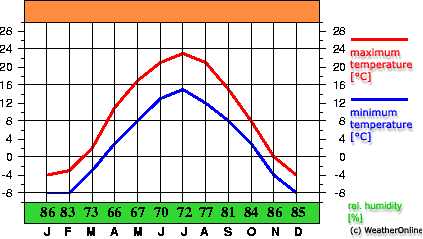
The summer in Moscow is comparable with northern European summers, hot but with frequent showers. So, don’t forget a sweater and raincoat. Nights and evenings can get cold even in July and August, so bring enough warm clothes. People usually dress casually, but jeans are not really admitted for a visit to the Bolshoi Theater. In churches, you should always wear clothing covering your shoulders and wrist. In some Orthodox churches outside Moscow, females may be asked to wear a long skirt and a scarf. Shoes should be strong, light and comfortable, as you will have to walk a lot while touring around Moscow. During winter times (November – March), warm clothing is essential.
Cockroach (Tarakani)
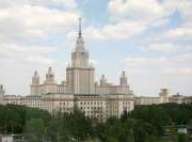
Cockroaches are sometimes called domestic animals of Moscow since they populate many Russian homes, especially student dorms. They are active only at night, harmless, but able to eat away all accessible food within hours. Usually, people would leave on lights all night in the kitchen to prevent cockroaches. Due to unknown reasons the cockroaches have started to disappear from Moscow houses during last several years. However you still have the chance to meet them in the old buildings such as MGU main building.
Eating out
A Russian Restaurant is not only a place to eat out, but also a place to be entertained. Usually, live bands will play from 20:00-24:00 and people will sing and dance. The quality of the bands is usually measured by the volume rather than by the quality of the sound. However, with the penetration of European culture in Russia, more and more restaurants are running without live music at all.
Eating times are different from Western European habit:
Lunch: 14.00-15.00
Dinner: 19.00-21.00
For small dishes, you may also consider Cafés to eat out. They are usually cheaper and don’t have music.
Prices for a meal are around 10-20$ in a cheap restaurant. Middle class and exquisite restaurants charge 2-5 times more. Bringing your own wine/drinks is not allowed. Tipping, “chaieviye” in Russian meaning “tea money”, is expected (10-15%) for good service and added (10-15%) to the bill in some upper class restaurants. Unlike Europe, the “service” is usually only included in the bill if there is a large group, and this will usually be noted in the menu.
Breakfast consists of cold meats, boiled eggs and bread served with Russian tea. Kasha (porridge) is a traditional breakfast dish, made from milk and oats, buckwheat or semolina. Midday and evening meals vary a lot, but may include borshch, the traditional beetroot soup served hot with sour cream, beef stroganoff, bliny, aladyi and especially ikra or krasnaya ikra (black and red caviar). Local “chicken of Kiev” should not be confused with Western imitations. Tsipleonok tabaka, is a delicious chicken dish roasted on spit. Whole roast suckling pig & roast goose stuffed with buckwheat, roast duck stuffed with apples and or shashlik (shish kebab) are traditional dinners served at parties and for special occasions. Other dishes are kotlyety po Pozharsky (chicken cutlets), pirozhky (fried rolls with different fillings, usually meat, potatoes, or cabbage), prostakvasha (yoghurt), pelmeni (meat dumplings), rossolnik (hot soup of pickled vegetables) and shchi (cabbage soup). Salalds (salati) are served in great variety (cucumbers, tomatoes, diced vegetables, cabbage, etc.) to almost every meal. Typical desserts: morozhenoye (ice cream, even in the coldest winter!), ponchiki (hot sugared dough-nuts) and vareniki (dumplings containing fresh berries, cherries or jam).
If you are planning to stay at the guest house of MGU, you will have the possibility to use one of the big kitchens on each floor of the University guest house, if you want to try out your own Russian cuisine. The kitchens are not equipped with tools, so you have to buy or bring your own.
Electricity
Electricity in Russia is 220 V 50 Hz AC. Sockets require a European-type plug or adapter except for the grounded plug from Switzerland. Modem jacks are the same as in European countries or the US. Trains usually provide sockets for electric razors.
Entertainment
The university offers numerous entertainment possibilities such as films, concerts, theaters, clubs, excursions, etc.
Look out at the message boards at MGU and other places. Moscow offers a rich variety of cultural events, operas, theaters, and concerts. Some good night clubs and discos are usually found attached to big hotels. A selection of places is available on our pages.
Export
Antiques and pieces of art such as ‘paintings, drawings, sculptures, icons , old books and pieces of archaeological value’ are generally forbidden to export. However, with permission of the Russian ministry of culture, department of cultural valuables’ safety, tel: (499) 252 76 75, and a 100% tax of the estimated value, export is officially allowed. This procedure is lengthy and time consuming and only worth if you want to experience the Russian bureaucracy.
There are no limits on alcohol and tobacco products to export from Russia, but you should take in consideration the restrictions of the country of your destination. The maximum allowance of money you can take out is up to USD 10’000 (up to USD 3000 without declaration, over 3000 till 10’000 with declaration).
You will be asked to fill out a customs declaration when you enter and leave the country. Please make sure that your indications are accurate for at least the parts of luggage you want to show a customs officer when being asked to present the valuables declared. Exporting other goods for commercial purpose is strictly regulated. Inquire in our office for specific details.
Family
If a Russian family hosts you for your accommodation, you will very soon take part to their everyday life. There might be things that you don’t agree with or that are unknown to you. To avoid misunderstandings, set times for meals and using bathrooms and showers. It’s expected that you are generous to the family if they organize theater tickets, visits of museums, excursions, etc.
Gifts / etiquette
Russians are great present givers and will present you with souvenirs when invited at Russian homes. Great gifts to give include specialties from your home town or country, chocolate, coffee, key rings, baseball caps, army knives, foreign coins or badges, watches, perfumes, etc. All Western goods are usually available in Moscow now, so don’t bother with goods you think Russians still be deprived of. The days where a pair of jeans equaled a month’s salary are long gone. If you are invited to private homes for dinner, bring a bottle of wine, candies, fine tobacco or a bouquet of flowers (odd numbers of flowers only, even number of flowers are only given at funerals). A small gift for children is always appropriate. Be prepared to accept all drinks and food offered when visiting friends. Refusing a drink or a toast is a serious breach of etiquette.
Holidays
National holidays are many in Russia. If a holiday falls on Thursday, then Friday and Saturday may also be a holiday. If a holiday falls on the weekend, then Monday will be generally also considered as a holiday.
Holidays in 2014
1-5 Jan – New Year holidays
7 Jan – Russian Orthodox Christmas Day
14 Jan – Russian Orthodox New Year (work day)
23 Feb – Defenders of the Motherland Day
8 Mar – International Women’s Day
20 Apr – Russian Orthodox Easter
Don’t forget to eat the pas’kha cheesecake!
1 May – Day of Spring and Labour
9 May – Great Victory Day (World War II)
12 June – Independence Day
22 Aug – Day of the State Flag
1 Sep – Knowledge Day (usually the first day of school unless it’s Sat or Sun)
4 Nov – Day of united people (is celebrated instead of Nov 7 being the day of October Revolution of 1917)
7 Nov – Anniversary of the October Revolution, now called ‘Grief Day’ or ‘Day of Accord and Reconciliation’ (work day)
12 Dec – Constitution Day (work day)
Universities including Moscow State University start on September 1st, and finish on July 1st with a winter break from January 25th to February 8th.
Luggage
Always take your valuables and documents into your hand luggage. Carry money and passports underneath your cloths to prevent losses from robberies, which occur frequently at train stations or airports. Always lock your luggage with a separate lock, since cases of theft have been reported even from airport workers opening pieces of luggage.
Medical aid
Take your own medication with you, since you will not know whether your preferred or prescribed medication is available. Western pharmacies can be found at:
- 36.6: Tel. 79 76 366
- Alphega : ul. Peschaniy Karier, 3, building 1-1B Tel. (495) 787 90 29*1488
- ‘Pharmakon’: Ul. Tverskaja 4 Tel. 692 03 01, 692 05 25
There is a medical center on the university campus where you have access in case an emergency. A small fee may be asked to cover material costs. If you wish to cover general medical treatment for non-emergencies, you may purchase a $60 per month medical insurance from the same center.
There are also several Western European Medical Centers that offer medical services:
- European Medical Center: Spiridonievskiy Per. 5, building 1, Tel. 933 66 55
- American Medical Center: 26, build. 6, Prospekt Mira (entrance from Grokholsky Pereulok), Tel. 933 77 00
- International SOS Clinic : Orlovskiy pereulok, 7 (3rd floor), Tel. 937 57 60
Make sure your insurance will cover the costs at these clinics. Entering the clinics, you might be asked to make a deposit by credit card.
No vaccinations are required for Western tourists visiting Moscow and Russia in general. If you spend more than 3 months in Russia, you must present evidence of a recent AIDS test when applying for a visa. Please check also the US government travel health pages or Travel Health Online for current medical recommendations/requirements and disease outbreaks in countries you may plan to visit.
Money
Hard currency is still required in Moscow to survive even though a number of restaurants, bars and expensive shops accept credit cards. Cash advancements on credit cards are possible in several banks, but commissions usually as high as 2-4% in addition to the commission required from you issuing bank are imposed. There are many ATM’s for EC International that spit out rubles, dollars and euros. Inside the University, many ATM’s accept various credit cards, like Mastercard and VISA cards, and debit cards, like the one belonging to the Plus net. Your issuing bank of your credit card will be able to tell you exact locations in Moscow for ATM’s. Locate all VISA ATM’s or Mastercard ATM’s.
All commercial transactions inside of Russia should be in rubles. So the hard currency should be used only during private transactions or be kept to be exchanged for rubles when needed. For the changes at currency exchange offices $20, $50 or $100 bills should be used. Make sure that all you $ or € notes are new (newer than 1992) and in immaculate condition, since torn, creased or strongly worn notes will be rejected by banks. Russia introduced new rubles in 1998, de-valuating the old rubles by a factor of 1000. At the end of 2006, no older ruble banknotes were in circulation anymore. Consult our list of Russian banknotes to check.
The yearly inflation rate is now estimated to be stable at around 5-10% per year. The exchange rate for ruble is oscillating around 35 rubles for 1 USD and ca 45 rubles for 1 EUR (see exact rate here).
Passport photos
It is good advice to take 4-6 passport pictures with you. You will need them at the first week to establish your student card, library card, monthly transportation cards, etc. It used to be hard to get photographs in Moscow, however, there are photo shops now at every metro station, so don’t worry too much.
Phone calls
Local calls are free in Moscow and in all major cities. Public phones, however, require phone cards. International phone calls are possible from most private phones, cell phones, and from our office. Also, public phones with calling cards now offer the possibility to call abroad without the hassle of going to the central telegraph station to order a call, wait for 1-2 hours to make the connection, only to find out in the end that the line was busy. International calls from Russia are now reasonably cheap (.10 cents a minute), and many check phone cards are also available to call to Russia.
You may always use our FAX number to send and receive personal faxes at our office:
1st Humanitarian building, 1st floor, A 175
Open Monday-Friday, 10am to 7pm
Map of the MGU campus with location of our office »
Cellular phones
Mobile phones (GSM 900 + 1800 standard) also work in most urban areas with good quality including Irkutsk and Lake Baikal. The cell phones are cheap and easy to get. There is no contract, you use the prepaid system. American cell phones will not work in Russia, you will have to buy a new cell and a SIM card once you arrive in Russia. European cell phones are working in roaming or you can buy a Russian SIM card and put it in your phone. Note that if you buy the SIM card in Moscow, the calls to other cities of Russia would be more expensive than the in-Moscow calls, and if you make a call from other city with a Moscow SIM card it will be even more expensive. It is good advice to get your cell phone the first or the second day of your stay. Note that texting abroad is much cheaper than calling.
Other radio electronic devices brought into Russia must have certificate from Glavgossvyaznadzor – including all emitting, transmitting, & receiving equipment such as GPS devices, satellite phones, and other kinds of radio electronic equipment. Excluding of course AM/FM radios.
Photographing, films
Even though there are officially no restrictions, people still consider filming or photographing railway stations, military installation, airports, etc. unlawful. Using flashes in churches or during performances is usually not allowed. Museums may ask for special fees if you want to take flash pictures. Film material and development agencies are abundant.
Computers
You can bring your laptop to Russia without problems, as long as it is for personal use. You may be required to show that your laptop is functioning properly at the customs when entering the country!
Internet
Russia has good Internet connections in all big cities. At MGU there are several internet cafes and in case of emergency, you also have access through our office. You can also find free Wi-Fi in the hall of the MGU Main Building. If you wish, you can get an online provider and direct access from your room. This however is only worth if you are planning to stay for min. 3 months since it takes a lot of efforts to install it. There are also a couple of internet cafes in Moscow and all major cities of Russia. The free wi-fi is available at MacDonalds and some other cafés.
If you are traveling, the post offices of any big city offers paid Internet access in their business area (they also have printers, fax, photocopier, etc.)
If you need to buy some electronics, Moscow hosts many electronic stores like M-Video (Leninskie prospekt, dom 64/2 open Mon-Sun from 10.00 to 22.00), Belii Veter (situated right by the campus at prospekt Vernadskogo, dom 6 open Mon-Sun from 9.00 till 22.00), Eldorado (ul. Profsoiuznaya 56).
Security
Visiting Moscow as a tourist can still be considered safer than visiting New York even though business and Mafia related crime has reached unprecedented highs. Beggars, especially gypsy children, will occasionally bother tourists. You should ignore them and walk away. Robberies and thefts have been reported at airports and train stations. So, watch out carefully for your luggage. Metro stations are safe even if you might find some drunk people returning home late at night. It is always best to be in a group of 2 or more. Official taxis are safe to ride, though expensive. A money-belt is essential to safeguard your documents and cash. You may also want to put your valuables into a safe at our office in Moscow or at the Russian Language Center. Moscow State University itself has a strict security system. In fact, all the university buildings, including the dorms, require an entry pass (called propusk) that you should always wear with you. For more about security, read a posting about security while traveling in Russia on our message board. Please also check your official government pages for travel warnings.
Sport events
Tickets for sport events are usually sold at the stadium. There is a huge sport complex near the university (Lujniki), where ice-hockey is played during the season. Other popular sport events are soccer games. The university campus offers a variety of sports and has almost a hundred different sports clubs with many famous athletes among its peers.
Tickets for travel
Train tickets are usually sold at the train stations where the trains bound for your destination leave. So, ask for tickets to St.Petersburg at the Leningradski train station, to Kazan and middle Asia at the Kazanski train station, to Western Europe at Belorusski station, for all Trans-Siberian trains (except No 26 to Novosibirsk via Kazan, which leaves from Kazanski vokzal) from Yaroslavski train station. The three main train stations (Kazanski, Leningradski, and Yaroslavsky) are situated at the metro station Komsomol’skaya (red line). There are also many state and private agencies selling tickets. The Central Railway Agency at Komsomolskaya Ploshchad (Tel 266 8333, metro Komsomolskaya) sells all domestic tickets. For international tickets, check out Agentsvo at 1, Lenningradsky Prospekt (Tel 262 0807, metro Belorusskaya). If you have a decent command of Russian, you should be able to do it yourself. In fact, if you study Russian, buying a train ticket is a real life experience where you can practice your Russian language skills.
We generally advise to travel 2nd or 1st class. Second class travel (or hard-class) in long-distance trains entitles you to a berth in a four-person compartment. It is possible that you may have to share your compartment with persons of the opposite sex as there is no rule of who gets together in a compartment. First class travel (or soft-class) entitles you to a berth in a two-person compartment, giving you more privacy.
If you make purchases, you need to know the number of the train, the date you want to leave and the time the train leaves, in advance, since ticket clerks will not advise you on possible train connections, but just tell you whether there are places available for the train and destination you cite. Information on train schedules is available in all the train stations, both in written tables and on computers. If you want to purchase a ticket for your friend or another person, you need to have a legible passport copy of the person traveling with you.
We advise you to purchase tickets within 2-5 days prior to departure. Always bring your passport and valid identification with you to make reservations. If you fluently speak Russian, you can try to obtain discounted tickets with your Russian student identity card issued by MGU (if you are enrolled in our classes). These discounts can go up to 20%! All tickets must be paid in rubles. Please note that while reservations can be made long before the departure, the actual tickets are only be issued 45 days before departure (for international tickets), and 40 days for domestic tickets.
For stopovers, you need to buy separate tickets for each leg of a journey. In other words, if you would like to travel from Moscow to Beijing, stopping over in Irkutsk and Ulan Bator, you need three separate tickets, specifying all your departure dates in advance (i.e., Moscow to Irkutsk, Irkutsk to Ulan Bator, Ulan Bator to Beijing). In theory, with a Moscow-Beijing ticket you may stopover in Irkutsk, and with a notation from your conductor, your ticket could still be used to complete travel to Beijing if you pay a significant extra fee in Irkutsk for a reservation on your next train. However, we strongly advise you not to go through this route, as many people ended up not having a seat any more or paying significant bribes…
And if you like comfort, you can also get all train and flight tickets from our office and create your individual journey along the Trans Siberian.
Food is generally available on long-distance trains in the dining car. As these cars are operated mostly by private people, quality differs a lot. Whereas you might find in some trains only hot dogs and bread, others will serve you delicious Russian food (for USD 5-10 for a menu). Usually, the Chinese dining cars are much better. Along the Trans-Siberian route the train stops at the cities for 10-20 minutes, sufficient time to buy food from the many of vendors at the train stations. Bedding is not included in the price of tickets for sleeping compartments. The bedding fee of around $ 3-5 and must be paid directly to the conductor.
When you travel by train, use common sense to prevent yourself from becoming a crime victim. When possible keep luggage in the compartment underneath your berth, and wear your valuables in a money belt. You can lock your sleeping compartment at nights, so travel on trains is generally considered very safe. Also note the security posting while traveling from our readers. Please also check-out your official government pages for travel warnings.
Tickets for local trains within Greater Moscow (Elektritchka) can be bought at the train station without passports or identification. Just ask people around where to buy the corresponding ticket to your destination.
Tickets for ballet, circus, theater, concerts etc.
Programs and tickets for all cultural events are usually available at small kiosks on streets or outside metro stations. Programs and available places are posted on the window. Don’t expect the selling person to advice you with tickets.
The ticket office of the Bolshoi Theater (the season is from September-Mai, during the Summer the Bolshoi is closed) sells tickets online.
Tickets for the famous circus next to the university can be bought at special ticket offices outside the circus prior to the opening (usually at 19.00).
Moscow has a number of excellent theaters playing classic and modern Russian pieces. Our favorites are
- Drama Theater, Ul. Malaja Bronnaja 4, Tel. 728 66 49
- Gogol Theater, Ul. Kazakova 8A, Tel. 262 92 14
- Gorki Art Theater, new house, Tverkoj Boulvar 22, Tel. 697 87 73
- Small Theater, Teatral’ny proezd 1, building 1, Tel. 624 40 46
- Theater of Satire, Triumfal’naya pl., 2, Tel. 699 63 05
The best musicals are performed at the Operetta Theater, ul. Bol’shaya Dmitrovka, 6, Tel. 925 50 50
For a list of events and places to go, you may also consult Afisha, Vash Dossoug or Moscow Out.
Lomonosov State University offers a variety of cultural events throughout the academic year in their own theater, concert hall and cinemas. These are announced regularly at the many Message boards on the campus.
Transportation
In Moscow, the main means of transportation are: metro trains, buses and mini-buses called “marshrutka”, and taxis.
The metro is the fastest and most convenient way to get around. It operates from 5:30am to 1:00am, and metro stations are easily identified by the red (M) signs. Trains run at intervals of 2-4 minutes, and even 1-2 minutes during rush hours, and every 5 minutes later at night. Metro magnetic cards for multiple rides are available at all metro stations in the entrance hall. One card is good for an unlimited number of rides, unless you exit the metro station, and costs about one dollar. Monthly and weekly passes are also available.
The bus transportation systems operates from around 05:00am till midnight. Tickets are available in the kiosks situated at the bus stops or from bus drivers directly. You enter the bus at the front door and pass the ticket in the turnstile.
The taxis are all operated by private companies and often don’t have any sign on it. You can call a taxi company if you want to be picked up from a place. If you want to get a taxi on the street you can watch for the cars with the taxi sign and make them a sign. You can also stop an ordinary Russian driver, who is ready to give you a ride for a fee. That’s the preferred way for Russians and works very well if you know exactly where to go and if you speak Russian (as a rule here: travel by two and never get into cars already occupied by two people!)
To hail a taxi, simply hold out your arm. Tell or show the driver the address (written in Russian) where you are going and ask the price. It will often be higher than normal if you are not Russian. You can often bring the price down if you say that it is too much and begin to walk away. The taxis can be ordered by phone (e.g., Moscow Taxi, Tel. (499) 995 0 654) and usually arrive after 5-10 minutes.
Teachers
If you are following a one-to-one individual course, make sure you are feeling comfortable in your relationship with your personal teacher. Learning is much more effective (and also efficient for the teacher) when you feel like your teacher is listening to your questions and concerns. A teacher student- relationship however also implies certain rules to be followed by both parties. Make sure these rules are clear to you and to your teacher.
If for some reason you may want to change a teacher, let us know in order to find a solution.
Vodka (‘little water’)
Vodka is the national drink, which is always ordered in grams (50g or 100g) and usually served pure, non-chilled. You may also buy bottles of vodka in stores. Vodka that is sold on the street is usually of bad quality or simply diluted industrial alcohol. Some reliable brands are Crystal, Moskovskaya, Absolute (Swedish though), Stolitschnaja Export, Putinka, and Kremlievskaja. On the campus, no alcoholic beverages must be sold, however, the fire department in the main building of MGU on the 5th floor (sign ‘Пожарная’) also sells vodka to quench your thirst, if you knock on their door and inquire for spirit.
At dinners, vodka is usually served before dinner starts and usually drunk in rounds. Be prepared to give a toast on your host’s hospitality, on your friendship relations, business success etc., if you are invited by friends at home or in a restaurant. At special occasions, Russian’s would even drink pure alcohol (‘spirt’), however, nobody will expect you to taste.
Water
Boiling tap water before drinking is strongly recommended. For fresh water, you should bring purification tablets with you (like the Micropure®-system) that are available in all stores/pharmacies. You may buy bottled drinking and sparkling water at any local supermarket in Moscow or at the MGU.